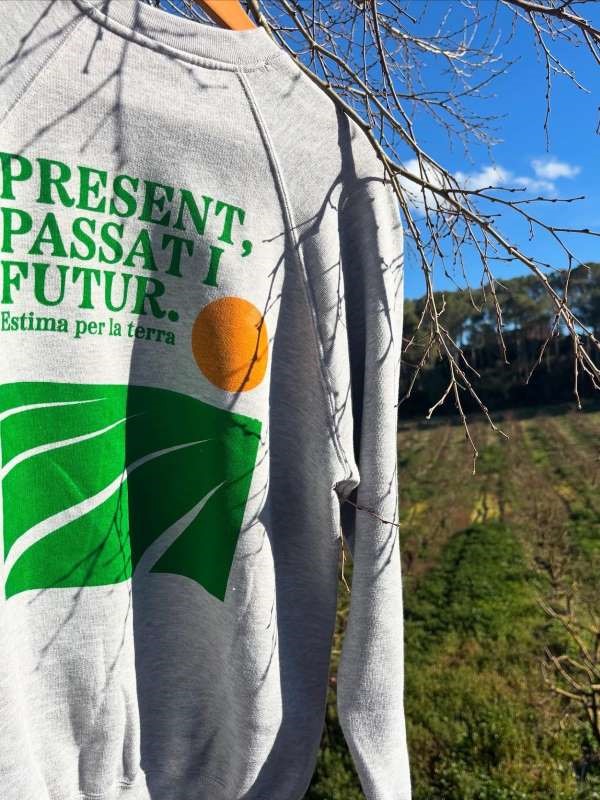
It comes from the past
Learn the history of Agrícola Son Burixó: a fertile land that is linked to several generations and families
The most distant past: where does it all begin?
Issue 106-107 of the publication Mallorca Agrícola, dated 1943, notes that “Sant Joan, established in the center of the island, and despite being one of the smallest municipalities in Mallorca, is of great importance considering its fertile lands, being the starting point of modern farming methods, the results of which spread throughout Mallorca”.
Not surprisingly, a key figure in understanding agricultural modernization and the role of Sant Joan in the history of agriculture is Antoni Oliver de “Els Calderers”, an illustrious son of the town. As the aforementioned publication explains, it is to this person that “Mallorca owes the rational practice, the most modern procedures, agricultural equipment and intensive cultivation that allowed the development of our regions”. It was Mr. Oliver who, after his multiple trips to Europe in the late 19th and early 20th centuries, brought these advances from the estate of which he was the owner, Els Calderers, and from there, throughout Mallorca.
Despite his key role in the modernization of the countryside, Oliver could not avoid the tragic outcome that augured for the estates and that resulted in parcelizations and sale of the lands that were part of them, in the late 19th and early 20th centuries.



Profit comes from work
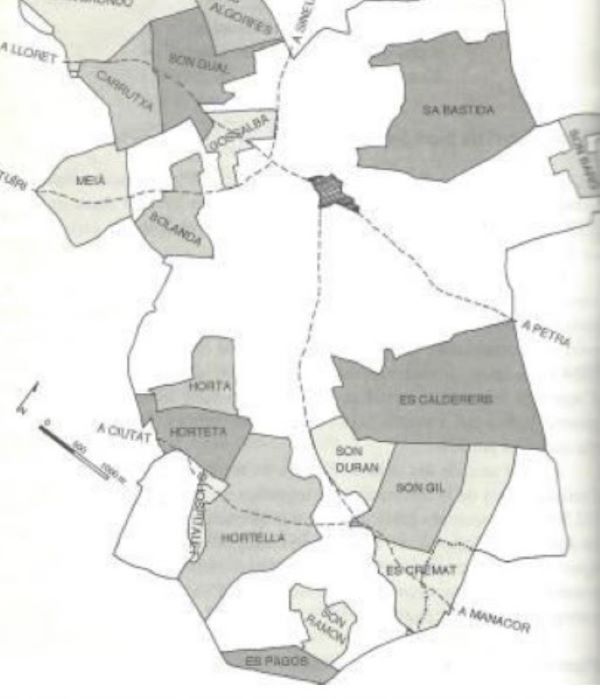
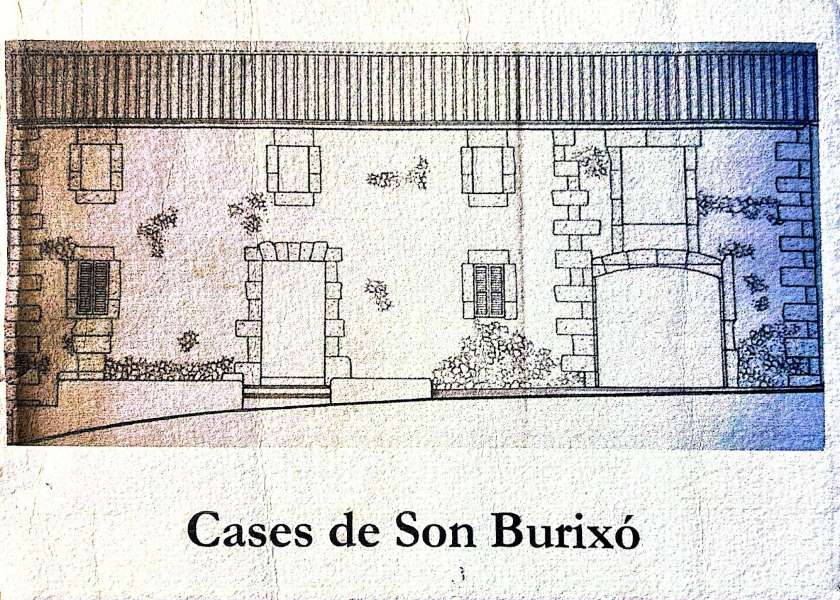
In the case of Son Burixó, the houses and the surrounding area were part of the renowned Els Calderers estate. They were fertile lands crossed by the Horta stream, which were used to grow vegetables to meet the needs of the estate. For this reason, its name was “S’Hort Vell des Calderers” and it had a well with a waterwheel, a washhouse (one of the oldest in Sant Joan), near the stream, a half-round cistern and numerous canals that are still preserved in the current houses of Son Burixó.
To understand the most recent origin of these lands, we must go back to Cosme Mas and Catalina Barceló, who at the end of the 19th century had rented the Els Calderers estate as a foreman and fig grower, respectively.
There they met, got married, and together, thanks to the effort and work on the same property, they bought the land where Son Burixó is located today, from the houses, to the places where the fruits of Agrícola Son Burixó grow.
Since then, the houses have remained continuously occupied by our godparents, who grew irrigated and dry crops, pigs, poultry and cows, to the places where the fruits of Agrícola Son Burixó grow.
From Son Burixó to Palma
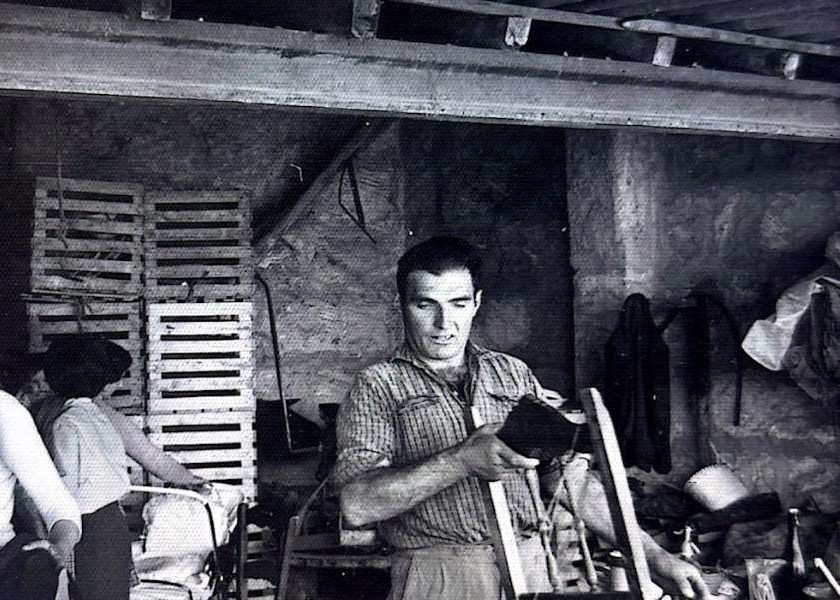
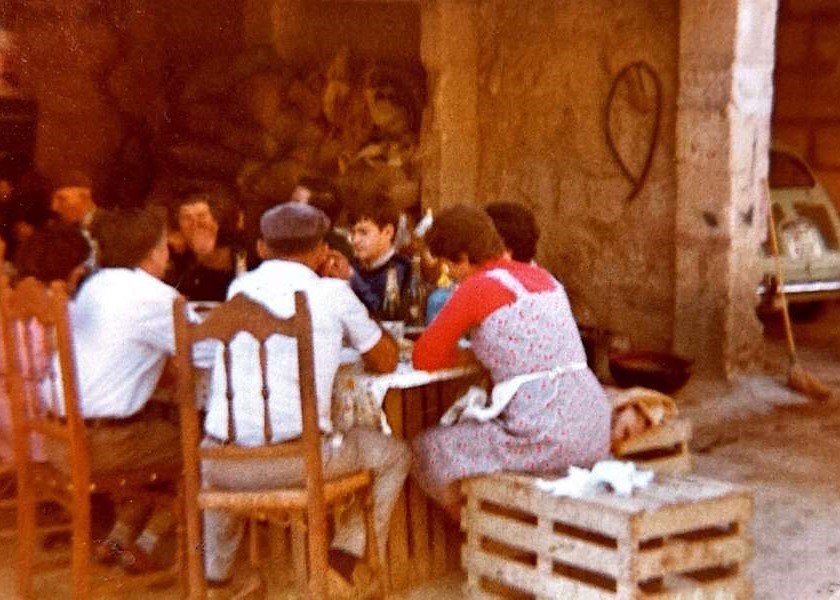
This is how the houses of Son Burixó, like so many other properties in the municipality, became an important point of agricultural production. Small family farms that, starting for self-sufficiency, could produce leftovers from their crops (tomatoes, grain, vegetables…) or livestock (milk, eggs, calves…) to be sold in the municipality itself and, towards the second half of the 20th century, in the markets of Palma.
So much so that every day a vehicle – a truck – loaded with groceries that the farmers of the Part Forana brought to the capital of the Island left for the City. Transporters, both of goods and people, also became very important, allowing the Part Forana farmers to travel to the markets of Palma (Pere Garau, L’Olivar…) to sell and return with empty boxes and full pockets.
After a few years, the arrival of tractors, vans and other modern machines facilitated the transition from production for self-sufficiency to production focused on sale to individuals or wholesalers. A good example is the Merca Palma, a point where wholesalers found products from different farmers from all over Mallorca (there were 32 from Sant Joan): Son Burixó, of course, included. Also the development, consolidation and growth of the Sant Joan Agricultural Cooperative, of which our predecessors were founding members.

From 1990 to today
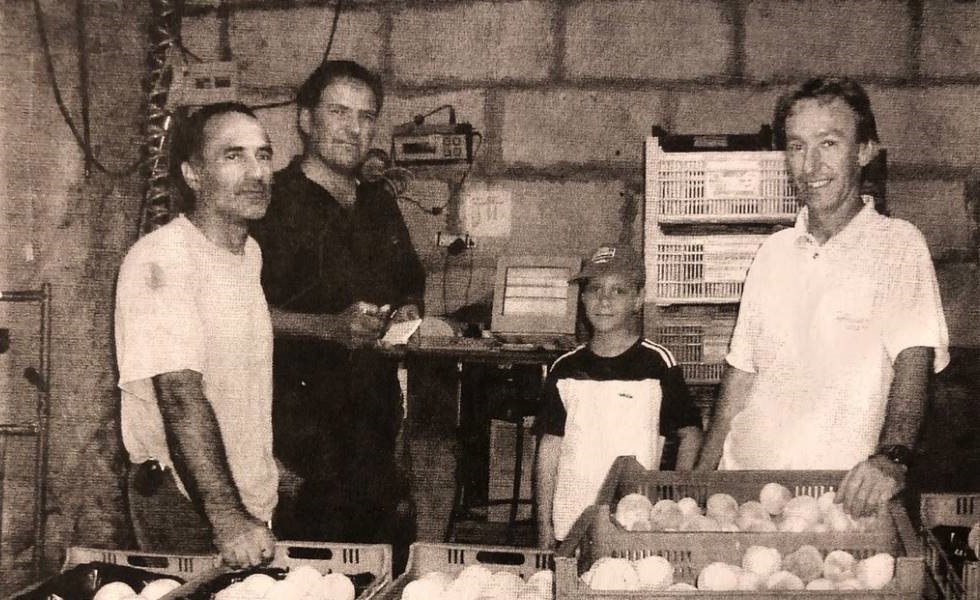
The idea was simple and daring in equal parts: to propose a fruit tree plantation. Evil tongues explain that the idea came up one evening at Bar Centro, the nerve center of the gossip of those who live in Sant Joan, between gin and tonics and laughter. But the truth is that months later it materialized in a plantation of a thousand trees focused especially on the peaches.
Far from being a simple hobby, this is the old plantation that after more than thirty years continues to produce fruit at a slow fire. At the head of the tree, three families who are friends and partners (Bauçà-Company, Gayà-Dalmau and Roig-Abraham) have maintained the fruit tree exhibition for these three decades, making the Son Burixó brand one of the most recognized when it comes to finding “peaches like those of old” in the squares, shops and markets of Mallorca.
In parallel with fruit growing, the women of the Bauçà-Company and Roig-Abraham families, Catalina Company and Xisca Abraham, were certified as young farmers and developed the cultivation of cereals (especially barley), a task that continues today, although it has also been expanded to the cultivation of legumes.
Within this apparently straight path, there have been many unexpected twists and turns. The most unfortunate was the loss, in 2012 and much too early, of Joan Roig Bauzà, whose life was stolen while cycling by a reckless driver. Roig was the owner of the land where the bulk of the fruit plantation is located and a key piece in the cereal section of Agrícola Son Burixó. An irreparable loss that has marked and will forever mark the history of Cereals i Fruites Son Burixó.

Present, past and future. A new stage
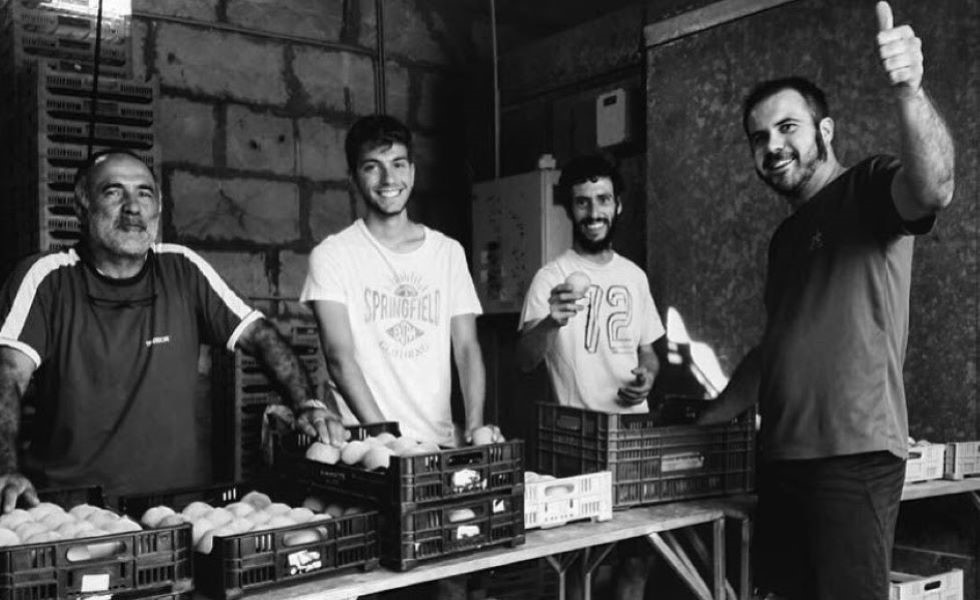
Also joining the Agrícola Son Burixó team has been Jose Suárez Rebassa, from Cas Garriguer, a family still closely linked to two of the largest holdings in Sant Joan, Es Calderers and Son Gil. An agri-food engineer by training and passionate about the countryside since he was a child, he brings the most technical knowledge of the agricultural sector and adds energy, positivity and youth to the operation.
In addition, there are many people who make it possible for the agricultural history of this region to continue advancing and that, little by little, these lines can be expanded.